
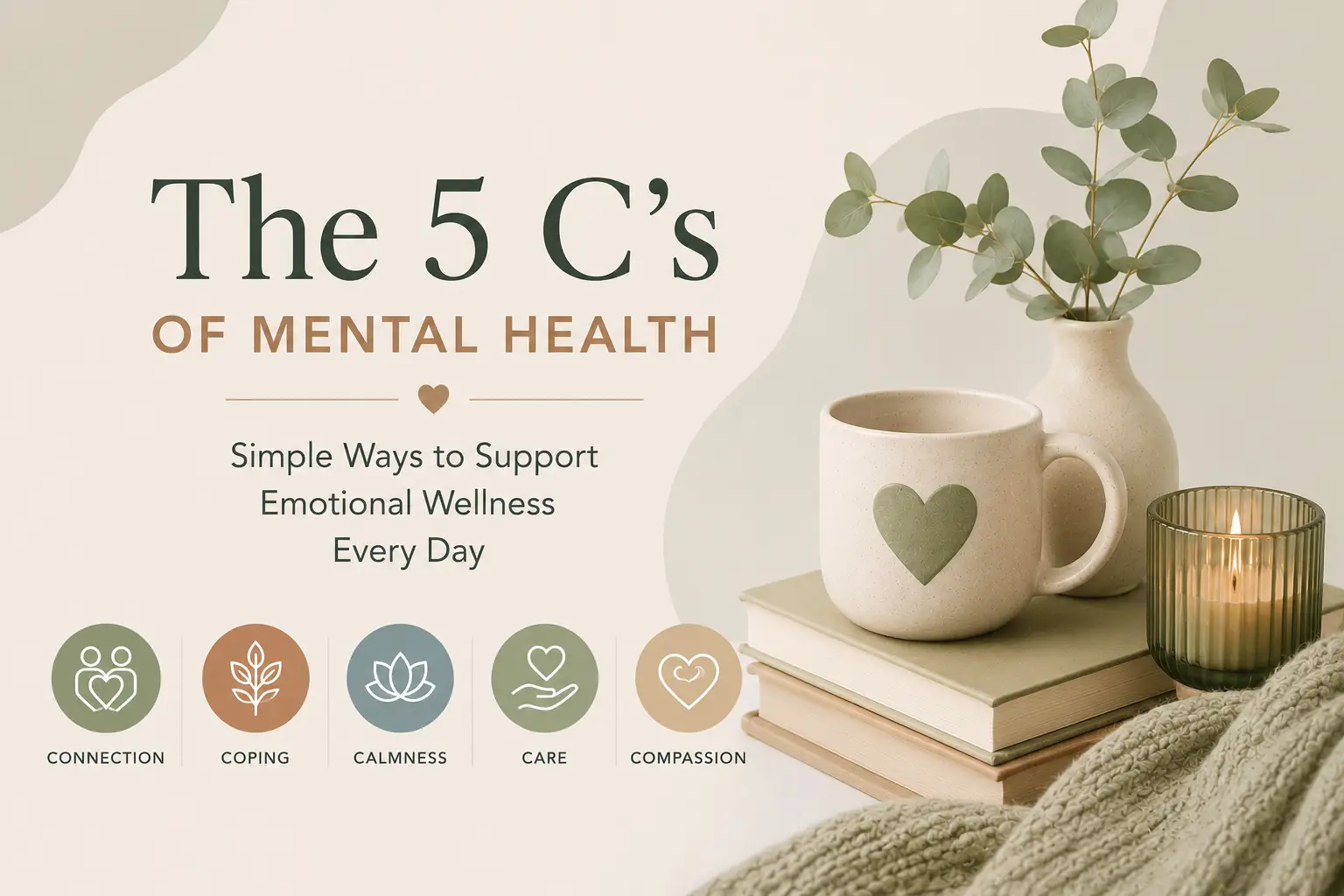
May is Mental Health Awareness Month, a time dedicated to creating more open conversations around emotional wellness, stress, anxiety, burnout, and the everyday challenges many people quietly carry. While mental health conversations have become more common, many adults still struggle to understand what actually supports emotional well-being in practical, realistic ways.
At Alba Wellness, we believe mental wellness does not have to begin with a crisis. Often, it starts with small, intentional steps that help people feel more grounded, supported, and emotionally balanced over time. One helpful framework is the 5 C’s of mental health: Connection, Coping, Calmness, Care, and Compassion.
These five areas work together to support emotional resilience and help people better navigate stress, relationships, work demands, parenting responsibilities, anxiety, and life transitions. Whether someone is feeling overwhelmed or simply wants to improve their emotional wellness, the 5 C’s of mental health offer approachable ways to strengthen mental well-being one step at a time.
According to the National Alliance on Mental Illness (NAMI), one in five U.S. adults experiences mental illness each year. Many others experience chronic stress, emotional exhaustion, or anxiety symptoms that affect daily life, relationships, sleep, and overall health. Mental wellness support has become increasingly important for working professionals, parents, caregivers, and young adults navigating constant pressure and overstimulation.
What Are the 5 C’s of Mental Health?
The 5 C’s of mental health are:
- Connection
- Coping
- Calmness
- Care
- Compassion
Together, these areas help support emotional wellness, stress management, and mental resilience in everyday life.
The goal of the 5 C’s of mental health is not perfection. Instead, they encourage healthy emotional habits that help people feel more supported, self-aware, and emotionally regulated over time.
How Connection Supports Mental Health
Connection is one of the most important parts of emotional wellness. Humans are wired for relationships, support, and belonging. Positive social connection can reduce feelings of loneliness, improve emotional resilience, and create a greater sense of safety during stressful periods.
Connection does not always mean having a large social circle. Sometimes it simply means having:
- one trusted friend
- a supportive family member
- meaningful conversations
- healthy communication
- emotional support during difficult moments
Many adults today experience digital connection without emotional connection. Constant notifications, social media comparison, remote work, and busy schedules can leave people feeling emotionally isolated even when surrounded by communication all day.
Improving connection may include:
- spending intentional time with loved ones
- setting boundaries around technology
- joining supportive communities
- participating in therapy
- creating space for honest conversations
Connection reminds people they are not meant to carry everything alone.
Healthy Coping Skills for Stress and Anxiety
Everyone copes with stress differently. Some coping strategies help emotional wellness, while others can increase stress or emotional exhaustion over time.
Healthy coping skills for stress and anxiety may include:
- exercise or movement
- mindfulness practices
- journaling
- therapy
- creative hobbies
- breathing exercises
- structured routines
- healthy sleep habits
Unhealthy coping mechanisms may include:
- emotional avoidance
- overworking
- excessive scrolling
- substance use
- isolation
- emotional shutdown
The coping portion of the 5 C’s of mental health focuses on building awareness around how people respond to stress and whether those habits genuinely support emotional health.
According to the American Psychological Association, chronic stress can contribute to anxiety, depression, sleep disruption, physical health issues, and burnout. Learning healthy coping strategies can improve emotional regulation and reduce long-term emotional strain.
Why Calmness Matters for Emotional Wellness
Modern life often rewards constant productivity, multitasking, and overstimulation. Many people spend large portions of their day in a heightened stress state without realizing how much it affects their nervous system.
The calmness aspect of the 5 C’s of mental health focuses on helping the body and mind regulate stress more effectively.
Calmness does not mean eliminating all stress. It means creating moments where the nervous system can slow down and recover.
This may include:
- taking breaks throughout the day
- reducing overstimulation
- spending time outdoors
- practicing mindfulness
- limiting excessive screen time
- creating quiet routines
- improving sleep habits
People experiencing chronic anxiety or burnout often struggle to feel calm because their nervous system stays activated for long periods of time. Therapy can help individuals learn grounding strategies and calming techniques that feel realistic and sustainable.
Care and the Importance of Self-Care
Self-care is often misunderstood as luxury or indulgence, but emotional care is an important part of overall wellness.
The care component of the 5 C’s of mental health focuses on meeting emotional, physical, and mental needs consistently.
Self-care may include:
- getting enough rest
- eating consistently
- maintaining boundaries
- attending therapy
- saying no when needed
- creating balance between work and personal life
- prioritizing emotional health
Many adults delay caring for themselves because they feel responsible for everyone else first. Parents, caregivers, professionals, and helping personalities commonly experience emotional depletion when self-care becomes an afterthought.
Taking care of yourself supports your ability to:
- manage stress
- stay emotionally present
- improve relationships
- maintain energy
- reduce burnout
- support long-term emotional resilience
Compassion and Emotional Resilience
Compassion is often given freely to others but withheld from ourselves.
The compassion portion of the 5 C’s of mental health focuses on practicing self-kindness during difficult moments rather than responding with shame, perfectionism, or harsh self-criticism.
Self-compassion may sound like:
- “I’m doing the best I can.”
- “It’s okay to need support.”
- “I don’t have to be perfect.”
- “Rest does not make me lazy.”
Research from Dr. Kristin Neff, a leading self-compassion researcher, shows that self-compassion can improve emotional resilience, reduce anxiety, and support healthier stress management.
Compassion does not remove accountability. Instead, it creates emotional safety that allows people to learn, grow, and recover more effectively.
How Therapy Can Support the 5 C’s of Mental Health
Therapy can help people strengthen every area of the 5 C’s of mental health by creating space to better understand stress patterns, emotional triggers, coping habits, relationships, and self-talk.
At Alba Wellness, we provide compassionate virtual therapy support for adults, parents, professionals, and individuals navigating anxiety, burnout, emotional overwhelm, and life transitions. Virtual therapy allows clients to access support from the comfort and privacy of home while building practical tools for emotional wellness.
Support may include:
- stress management strategies
- anxiety support
- emotional regulation tools
- healthy coping skills
- burnout recovery
- self-compassion work
- relationship support
- mindfulness techniques
Mental wellness is not about becoming perfect. It is about creating healthier ways to care for yourself emotionally over time.
Frequently Asked Questions About the 5 C’s of Mental Health
What are the 5 C’s of mental health?
The 5 C’s of mental health are Connection, Coping, Calmness, Care, and Compassion. These areas help support emotional wellness, resilience, and stress management.
Why are coping skills important for mental health?
Healthy coping skills help people manage stress, anxiety, emotional overwhelm, and daily challenges in healthier ways.
How does compassion improve emotional wellness?
Self-compassion can reduce self-criticism, improve emotional resilience, and support healthier responses to stress and setbacks.
Can therapy help improve emotional resilience?
Yes. Therapy can help individuals develop emotional awareness, coping tools, communication skills, stress management strategies, and healthier emotional habits.
What are simple ways to improve mental wellness daily?
Small daily habits like rest, mindfulness, supportive conversations, boundaries, movement, and emotional self-care can support overall mental wellness.
Mental health support does not have to wait until things feel unmanageable. Sometimes the smallest changes in connection, coping, calmness, care, and compassion can create meaningful emotional growth over time.
At Alba Wellness, we’re committed to helping individuals feel more grounded, supported, and emotionally balanced through compassionate, personalized virtual therapy care.